
英国公文書の報告書より。”日本軍がビルマや雲南から消えた後、この辺りは中国人盗賊の「楽しい狩場」になり、物品家畜の略奪だけでは無く村人まで消し去っているとの事です。”
中国山賊恐るべし。
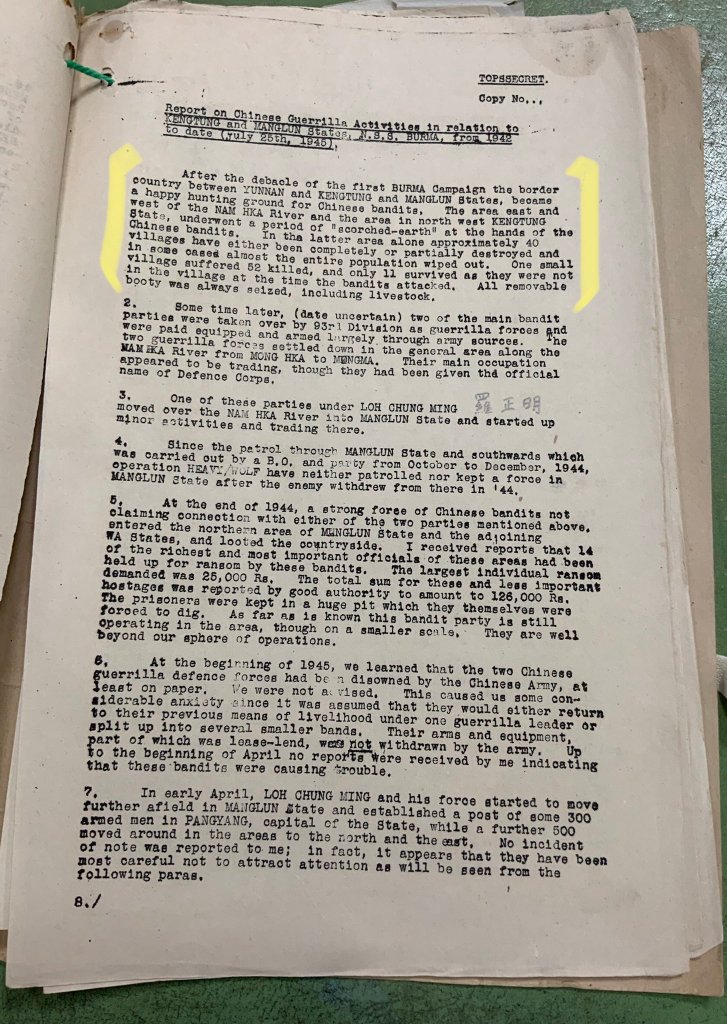
イギリス National Archive Catalogue:
https://discovery.nationalarchives.gov.uk/details/r/D7657648
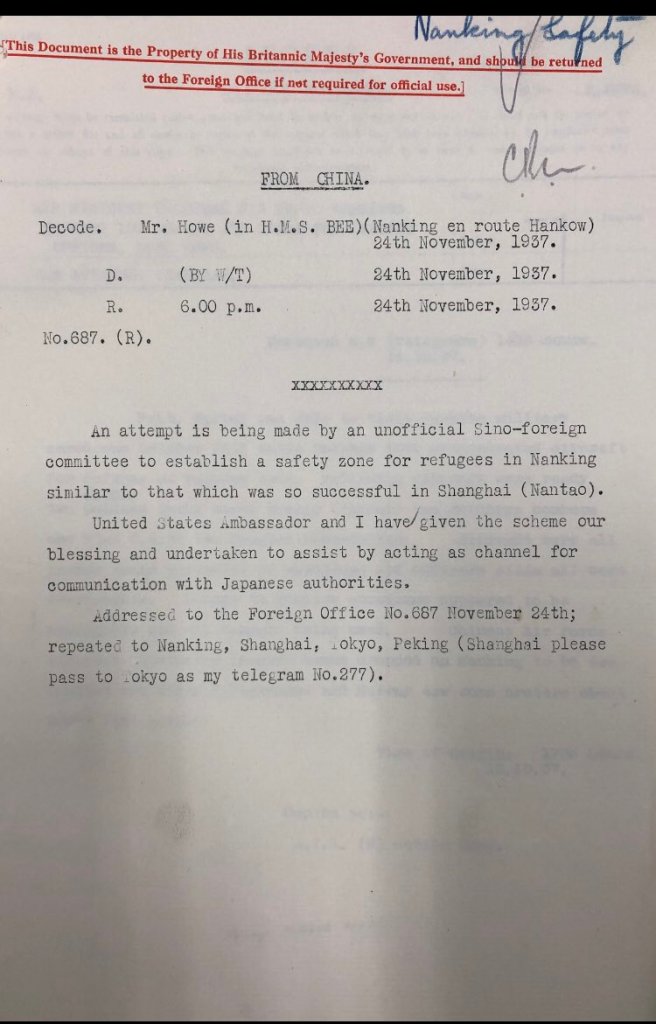
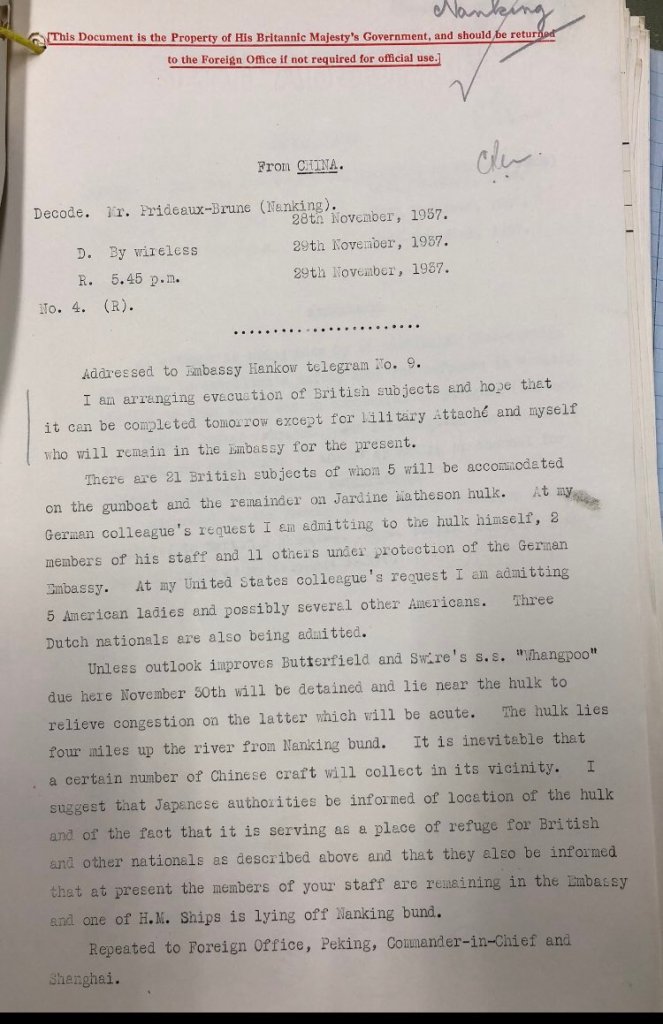
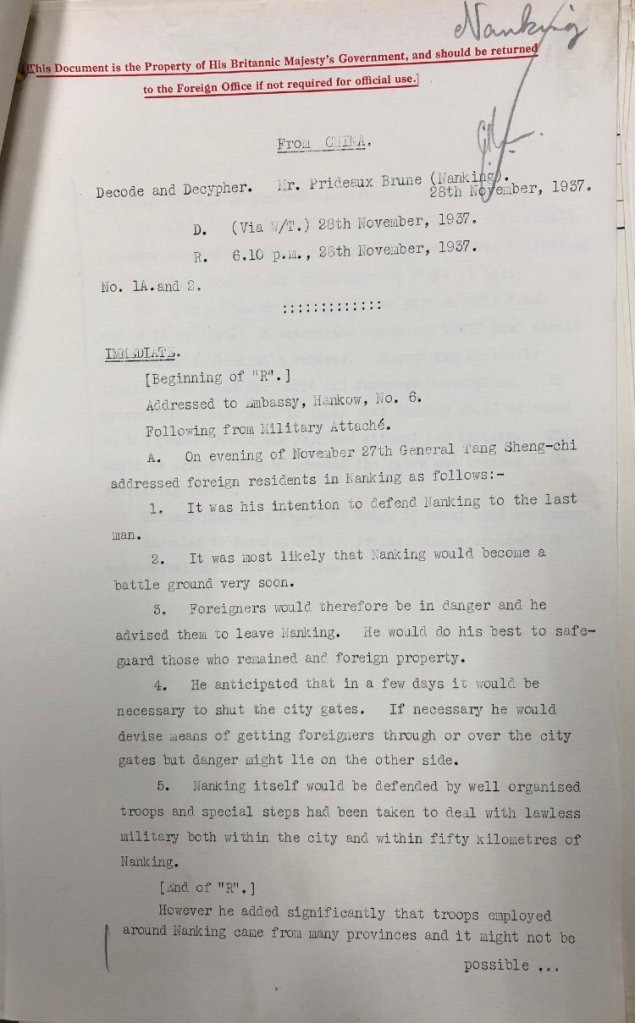
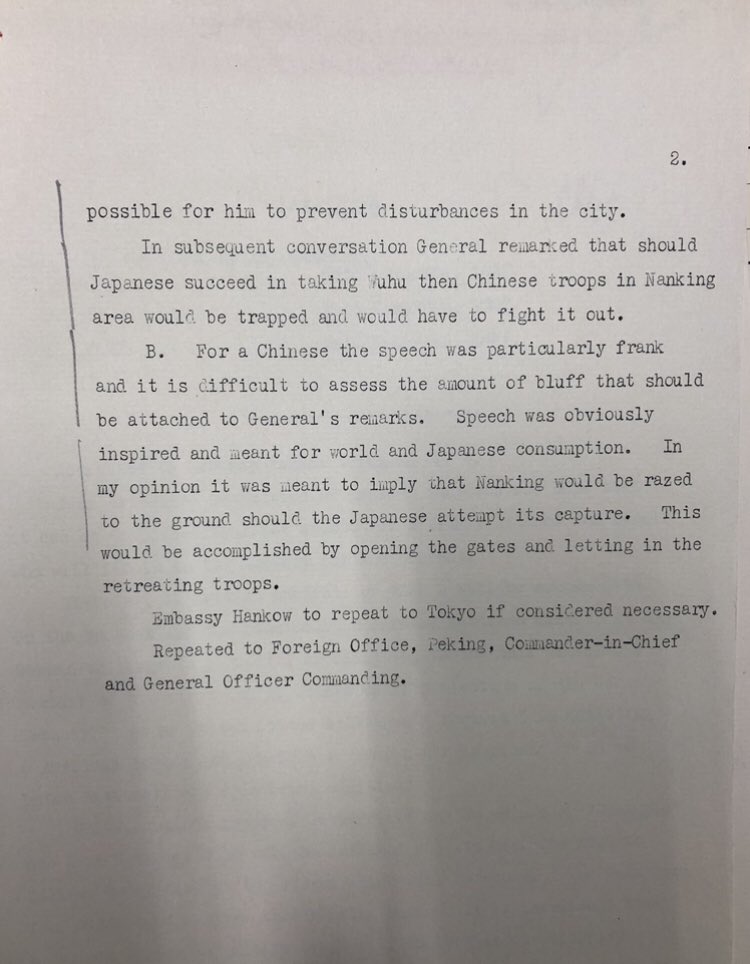
英国公文書の報告書より。”日本軍がビルマや雲南から消えた後、この辺りは中国人盗賊の「楽しい狩場」になり、物品家畜の略奪だけでは無く村人まで消し去っているとの事です。”
中国山賊恐るべし。
イギリス National Archive Catalogue:
https://discovery.nationalarchives.gov.uk/details/r/D7657648
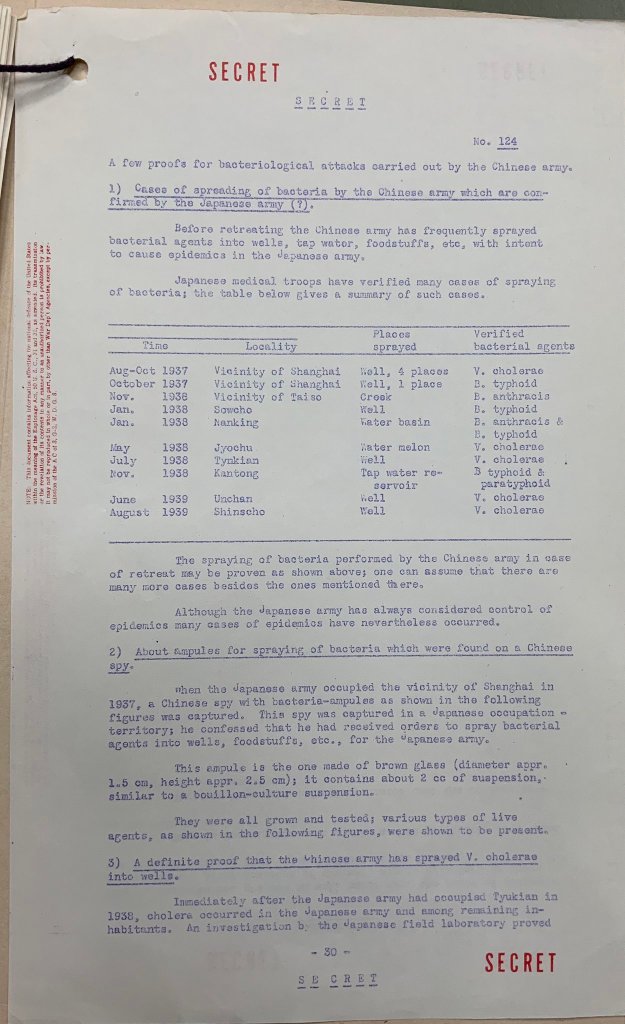
サラサ さんが英国公文書で見つけてくださった中国軍が行った細菌攻撃の証拠を書き出してみました。
(from a part of the National Archives United Kingdom WO 208/3991)
SECRET No.124
A few proofs for bacteriological attacks carried out by the Chinese army.
Before retreating the Chinese army has frequently spraying of bacteria; the table below gives a summary of such cases.
———————————————————————————————————-
Time Locality Place sprayed Verified bacterial agents
———————————————————————————————————-
Aug-Oct 1937 Vicinity of Shanghai Well, 4places V. cholerae
October 1937 Vicinity of Shanghai Well, 1places B. typhoid
Nov. 1938 Vicinity of Shanghai Creek B. anthracis & B. typhoid
Jan. 1938 Sowcho Well B. typhoid
Jan. 1938 Nanking Water basin V. cholerae
Nov. 1938 Kantong Tap water reservoir B. typhoid & paratyphoid
June 1939 Unchan Well V. cholerae
August 1939 Shincho Well V. cholerae
———————————————————————————————————-
The spraying of bacteria performed by the Chinese army in case of retreat may be proven as shown above; one can assume that there are many more cases besides the ones mentioned there.
Although the Japanese army has always considered control of epidemics many cases of epidemics have nevertheless occurred.
2) About ampules for spraying of bacteria which were found on a Chinese spy.
When Japanese army occupied the vicinity of Shanghai in 1937, a Chinese spy with bacteria-ampules as shown in the following figure was captured. This spy was captured in Japanese occupation territory; he confessed that he had received order to spray bacterial agents into wells, foodstuffs, etc., for the Japanese army.
This ampules is the one made of brown glass (diameter appr. 1.5cm , hight appr. 2.5cm); it contains about 2 cc of suspension, similar to a bouillon-culture suspension.
They were all grown and tested; various types of live agents, as shown in following figures, were shown to be present.
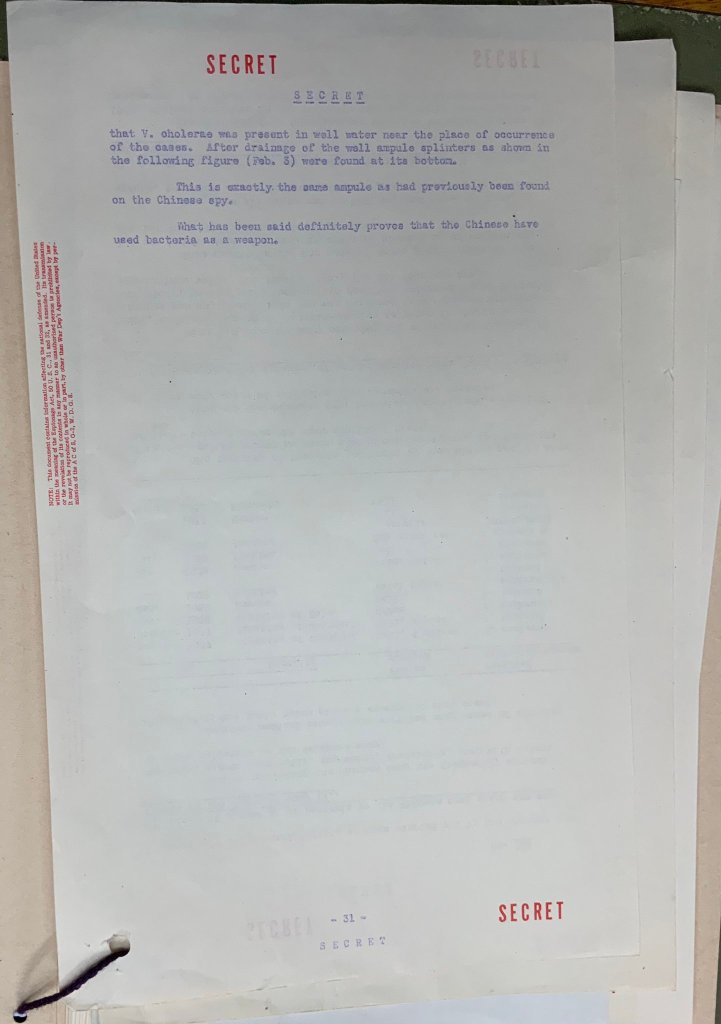
3) A definite proof that the Chinese army has arrayed V. cholerae into wells.
Immediately after the Japanese army had occupied Tyukian in 1938, cholerae occurred in the Japanese army and among remaining in habitants. An investigation by the Japanese filed laboratory proved that V. cholerae was present in well water near the place occurrence of the cases. After drainage of the well ampule splinters as shown in the following figures (Feb. 3) were found its bottom.
This is exactly the same ampule as had preciously been found on the Chinese spy.
What has been said definitely prove that the Chinese has used bacteria as weapon.
【日本語訳】
秘密 No.124 (英国公文書 WO 208/3991 の一部)
中国軍が行った細菌攻撃のいくつかの証拠。
1)日本軍が確認した中国軍による菌の拡散事例(?)
撤退する前に、中国軍は頻繁に細菌を散布した; 下の表はそのような場合の要約です。
———————————————————————————————————-
時間 地域 散布場所 検証済みの細菌剤
———————————————————————————————————-
8ー9月 1937年 上海隣接地域 井戸、4箇所 コレラ菌
10月 1937年 上海隣接地域 井戸、1箇所 腸チフス
11月 1938年 上海隣接地域 小川 炭素菌&腸チフス
1月 1938年 Sowcho 井戸 腸チフス
1月 1938年 南京 洗面器 コレラ菌
11月 1938年 広東 水道水貯水池 炭素菌&パラチフス
6月 1938年 Unchan 井戸 コレラ菌
8月 1938年 Shincho 井戸 コレラ菌
———————————————————————————————————-
中国軍が退却時に行った細菌散布は上記のように証明されていると思われるが、それ以外にも多くの事例があると思われる。
日本軍は常に伝染病の管理を考えていたが、それにもかかわらず多くの伝染病が発生している。
2)中国のスパイから発見された細菌散布用アンプルについて
1937年に日本軍が上海周辺を占領した際、下図のような細菌散布用アンプルを持った中国人スパイが捕らえられました。 このスパイは日本軍の占領地で捕らえられ、日本軍のために井戸や食料品などに細菌剤を散布する命令を受けていたと自供しています。
このアンプルは茶色のガラス製のもの(直径約1.5cm、高さ約2.5cm)で、約2ccの懸濁液が入っていて、ブイヨン培養の懸濁液に似ている。
いずれも培養して試験したもので、下の図に示すような各種の生薬が存在していることがわかりました。
3)中国軍がV.コレラ菌を井戸に入れたを決定的に証明している。
1938年に日本軍がTyukianを占領した直後、日本軍と残留していた住民の間でコレラ菌が発生した。 日本の研究所が調査したところ、発生場所付近の井戸水にコレラ菌が存在していたことが判明した。 井戸の底には下の図のようなアンプルの破片が発見された(2月3日)。
これは、中国のスパイにおいて発見されたの貴重なものと全く同じアンプルである。
言われていることは間違いなく中国が細菌を武器として使用したことを証明します。
日本語版「インドネシアにおけるオランダ350年と日本3年半の統治比較」を元にアプリ使用にて英訳しました。誤訳があれば、一言頂けると助かります。
Do you know “Batavia’s Chinese massacre?” About 10,000 Indonesian Chinese have been killed by Dutch and only 600 – 3,000 are said to have survived. During the 333 years of Dutch colonialism many Indonesians were killed and also died of starvation. Let me continue.
●300 years of rule in the Netherlands (1) Compulsory cultivation system = In the 19th century, one-fifth of the arable land was forced to grow coffee tea and other products destined for the Netherlands.
As a result, many villages collapsed, the food self-sufficiency system was dismantled, and the average life expectancy dropped to 35 years old as people continued to die of starvation. However, the benefits to the Netherlands actually accounted for a third of the national budget.
For example, four million people, half of the population of Java Madura region, are forced to engage in forced cultivation.
The decline in rice production led to a rise in the price of rice, and in 1850 a famine occurred due to forced cultivation and a bad harvest, and the population of the village of Dumak dropped from 336,000 to 120,000 in Gorobogun, from 89,500 to 9,000.
(2) In order to develop the natural resources, a large number of Indians and Chinese immigrated to Indonesia as bitter people and used these immigrant people for the economic and distribution mechanism, so that a hierarchy was formed in which they rose above the Indonesians
and dominated the Indonesians, creating the cause of the later racial conflicts. (3) The Dutch created mixed-race children with Indonesians on a large scale and made them officials of indirect rule. It left the administration to mixed-race children and overseas Chinese,
and banned most Indonesian participation in politics and administration. The Dutch government imposed heavy taxes, and the overseas Chinese became usury and the Indonesians suffered from the 200% interest rate.
(5) Because of the divide and rule, it fomented animosity among ethnic groups and intensified tribal strife. East Timor, a Portuguese colony whose inhabitants became Christians, led to conflict with the Muslim Indonesians.
(6)In the 20th century, in response to the world’s criticism, only a few percent of people were able to attend school, although only a primary education (3 years) was provided. Furthermore, Dutch was made compulsory for those who went on to advanced schools.
There are about 10 Indonesians a year who are university graduates. (7) In order to prevent the residents from inciting armed rebellion, they banned youth sports and group training, and even banned a few processional marches.
(8) All residents’ gatherings are prohibited and all independence activities are prohibited. Any independence activists were exiled or put to death on an island such as New Guinea.
(9) Raising the national flag and singing the national anthem are, of course, prohibited. (The national flag and anthem have not yet been decided, but there were national flags and songs.)
(10) Islam, which most Indonesians believe in, but spread Christianity.
●Post-war trends in the Netherlands (11) On 17 August 1945, Indonesia’s Sukarno announced a declaration of independence, but the Netherlands refused to recognize it and re-entered the country.
(12) This resulted in four years of fighting until the ceasefire of December 1949. In the struggle, 800,000 people died in the war. This was because the Dutch had an abundance of modern weapons and the Indonesian side had only 40,000 small arms, etc.,
given to them by the Japanese, and “the War of Independence was a war of bamboo spears and tanks. (13) The Netherlands, instead of apologizing for the massacre, claimed four years of war expenses from Indonesia at the peace talks,
and demanded that Indonesia pay all the budget deficits of the Dutch Indonesian government at the final peace talks in 1949. Can you believe it? I can’t!!!
Let’s take a look at the Japanese colonial period. ●Three and a half years of Japanese rule (1) Permission to raise the national flag and sing the national anthem was granted (this was revoked a month later, but was approved with independence in 1934).
(2) Release the leaders of national movements (such as Soekarno Hatta) and allow them to conduct national tours for national unity. (3) Six years of primary education is provided, and a schoolyard is built to emphasize physical education.
At the same time, a Normal School was established to train Indonesian teachers.
4) Established professional and training schools for agriculture, fishery, shipbuilding, industry, medicine, etc., and finally trained 100,000 intellectuals (national elite) in just three and a half years, when there were only 600 at that time.
(5) The Central Council of Councillors (the highest advisory body) was established in Java, and the Provincial Council of Councillors was established in each region, and Indonesians were actively promoted to high-ranking officials and cultivated administrative capacity.
(6) As a result, the unification of the behavior and feelings of the Indonesian people was achieved by spreading the language through newspapers, radio, movies and school education.
(7) Focused on teaching rice farming to establish a food self-sufficiency system. Japan did this same things among Korea, Taiwan, and Manchuria.
(8) One million youth corps, 1.5 million police corps, women’s corps, students’ corps, neighboring groups, etc. were formed to organize Indonesian residents and cultivate the unity of Indonesian people.
(9) Established the PETA, gave military training to Indonesians, and built the first Indonesian army. It played a leading role in the later war of independence against the Allied Forces, and also played a leading role in the creation of the Indonesian National Army.
(10) The Putra movement and the Java Protestant Movement elevated Indonesian nationalism and instilled a spirit of independence and bravery.
(11) Japan supported the Indonesian Youth Corps (Angkatan Muda), which promotes the independence movement, and had them hold a national conference to promote the independence movement by the youth.
(12) The emphasis was on Islam. In particular, it integrated Islamic groups that were divided at the time (mashmi), and it also emphasized Islam in primary and military education.
(13) (After WW2) Japan supported the independence movement by giving a large amount of weapons and ammunition to the Indonesian side without the knowledge of the Allied forces.
(14) (After WW2) About 2,000 Japanese soldiers stopped in Indonesia, participated in the war of independence with the UK and the Netherlands, and gave war guidance, and about 1,000 died in the war.
I believe that the Japanese have done more for the Indonesians than the Dutch.
Today, China claims the territories of Japan, India, Bhutan, Vietnam, Indonesia, Malaysia and Taiwan as its own. And there are always westerners who promote China’s expansionary policies.
It proves that the Ainu, Honshu and Okinawan Japanese are the descendants of the Jomon, original Japanese. The Ainu culture and Ainu people did not appear in Hokkaido until the 12th century.
Trade had been conducted between Honshu and Hokkaido before the 7th century, and the establishment of an executive government was being considered. In Hokkaido, bronze vessels identical to the 7th century Shosoin Gobutsu (Nara period) have been discovered.
It is very likely that it was under the Ohshu-Fujiwara clan before the emergence of the Ainu. It means that Hokkaido has been part of the Japanese cultural sphere since the time of the advent of the Ainu. The Ainu culture did not appear in Hokkaido until the 12th century.
Even before the migration of the Okhotsk people from Sakhalin to Hokkaido and the establishment of Ainu culture, Hokkaido was already home to many Japanese who were descendants of the Jomon. Shrines and temples had already been built in the Heian period.
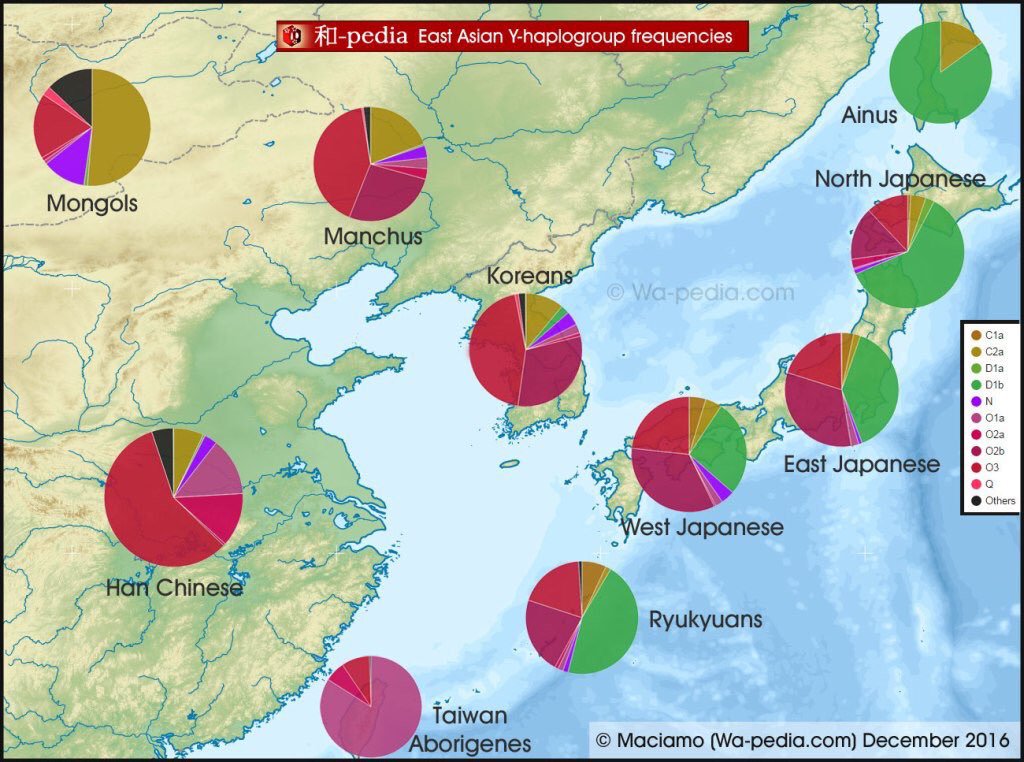
The roots of Ainu mythology are similar to those of Japanese mythology. In terms of genetics, the Ainu have a gene called “Y” that the Japanese of Honshu and the Japanese of Okinawa do not have.
It indicates that the Sakhalin Okhotsk people migrated to Hokkaido and mixed with the descendants of the indigenous Jomon people to form the Ainu culture in Hokkaido. Hence, the Ainu do not qualify as an indigenous people under the UN resolution.
This is not the same as the mass genocide, ethnic eradication, and cultural genocide by white Europeans who came to the United States or Australia, like the Native Americans in the United States or the Aborigines in Australia. Don’t put the guilt of westerners on the Japanese.
(1)The Ainu used to burn down their houses when their families died. This was a cause of poverty, so the Japanese government banned the burning of houses when people died. (2) Women’s face tattooing was banned. (3)The Japanese government established schools for Ainu children.
Until then, the Ainu did not have a common language among the tribes and did not have a written language. The Japanese government gave money to parents who did not want to send their children to school, provided school breakfasts &lunches for their children,
and taught Ainu children, who were not in the habit of bathing and had a high rate of contagious diseases, to bathe in school and keep themselves clean. Do you call this ethnic cleansing?
The Japanese government allowed the Ainu, who had no concept of land ownership, to own vast land and gave them privileges such as tax exemptions. The Ainu owned vast tracts of land and rented them out to Japanese farmers.
It was GHQ’s agrarian reform that deprived the Ainu of their land and impoverished them. You also don’t seem to know the difference between annexation and colonization.
The West colonized Asia and Africa, using Asians and Africans as mere laborers for hundreds of years, raping local women when they wanted to, creating mixed race children and trading locals as slaves.
Contrary to the Western colonizers , Japan provided infrastructure to Taiwan and Korea with Japanese funds and improve sanitation, abolish slavery, and provide education to the uneducated commoners and doubled the population.
Taiwanese and Korean commoners were educated and enjoyed a cultural life for the first time. Don’t equate Japan’s policy towards Taiwan and Korea with the Western colonies.
After Japan was defeated, the West came back to recolonize Asia. When the Dutch withdrew from Indonesia, they demanded an infrastructure payment from Indonesia. The British took Chinese from Hong Kong or Indians to various parts of SE Asia and let the locals rule over them.
This is why overseas Chinese still control the Southeast Asian economy. As recently as the anti-Chinese riots in Indonesia, the Rohingya issue, the Hong Kong issue, and other ethnic issues in Asia were brought to Asia by Western colonialists as well.
Your “research” is not the pursuit of historical facts, but merely the gathering and spreading of information that fits your ideology( Communism?).
Written by aino
東京裁判で南京大虐殺はどうして認定されたのか?
有志国際高校校長の道徳授業 https://www.yushi-kokusai.jp/moral/4393/
道徳授業 「真実はこうだ!」(5) ―日本人の誇りを取り戻すために
―勝った方の証拠だけ採用して裁判と言えるのか―
内容―「日本が提出した証拠資料はほとんどが却下された」
今回は、東京裁判で果たして公正な証拠に基づく裁判が行われたのか、というテーマで検証したいと思います。裁判には、証拠が必要です。有罪も無罪も、すべては証拠によって判定されなければなりません。事実の認定は、証拠によらなければならないのです。これを「証拠裁判主義」と言います。では、東京裁判は、証拠によって事実の認定がなされたのでしょうか。
1、検察側の証拠だけで判決文が書かれた
証拠には、検察側の証拠と、弁護人側の証拠とがあります。当然、検察側の証拠は被告の有罪を証明するためのもので、弁護側の証拠は、被告の無罪を証明するために提出されます。しかし、東京裁判では、検察側の証拠だけで判決が下されたのです。検察側が出した証拠に対しては、弁護側に、反対尋問の機会さえ与えられませんでした。さらに、東京裁判所条例には、偽証罪の規定がなかったために、嘘の証言や捏造された証拠がまかり通ったのです。弁護側が出した証拠は、多くが却下され、判決に当たっては、そのほとんどが採用されませんでした。その典型的な例が、南京事件で有罪(絞首刑)となった松井石根大将です。
2、南京事件裁判の不公正
南京で日本軍による30万人以上の南京市民の大虐殺が行われたとされる事件の監督責任を問われ、松井被告は死刑宣告がなされました。しかし、その裁判の事実認定は、極めてでたらめのものでした。南京事件というのは、東京裁判で中国側が初めて出してきたものです。検察側証人として出廷したマギー神父は、日本兵の残虐行為をいくつもあげたのですが、弁護人の反対尋問で実際に見たのは殺人1件、それも歩哨に誰何(呼び止めて問いただすこと)されて逃げたものを射殺したケースでした。これは、戦時下では合法です。
当時、南京には、入城(南京市は周りを高い城壁で囲まれていた)した将兵以外にも、百数十人もの新聞記者やカメラマン、国際委員会の委員、多くの外国人記者などがいましたが、奇妙なことに、東京裁判で証人として出廷したもの以外に、誰ひとり、虐殺現場や死体を見たものがいないのです。一方、弁護側の証人として出廷した証人の証言は一切採用されず、松井被告に有利な証拠も一切採用されませんでした。それは、南京攻撃の前に松井大将が出した「投降勧告文」(降伏するよう攻撃前に呼びかけた文書)や、指揮下にある部隊に出した南京の古跡(史跡)保護や、外国権益の尊重、一般住民の宣撫(日本軍の方針を知らせて住民の心を安定させること)命令書、指揮官として軍律を厳しく守って違法行為などしないよう厳重に注意するよう命令した訓戒書、訓戒を破って不法行為をした将兵に対する厳重な処罰や賠償などの証拠書類や証言など、すべて無視されました。
3、原爆投下の批判をかわすためにでっち上げられた事件
そもそも、南京大虐殺など、連合軍が捏造(実際になかったことを事実のように仕立てあげること・でっち上げ)した「嘘の歴史」であることは、各種資料によって証明されているのです。裁判当時検察官や裁判官が、でっち上げであることを知らなかったはずは絶対にありません。
では、何故、南京事件をでっち上げたのでしょうか。
東京裁判におけるアメリカは、自らの広島、長崎への原爆投下による31万5千人、4回に及ぶ東京大空襲、さらには60以上の主要都市の空襲(航空機で地上の目標を襲撃すること)による数十万人に及ぶ「非戦闘員」の無差別殺戮(残忍な方法で大勢の人を殺害すること)への批判をかわす必要に迫られていました。そこで、南京事件を採用したのです。
一般の国民である非戦闘員の殺害は、国際法違反であることはいうまでもありません。戦犯として裁かれなければならなかったのは、むしろアメリカの方だったのです。ユダヤ人を虐殺したナチス・ドイツのホロコーストと匹敵する、日本軍の悪逆非道の事件をでっち上げて裁くことで、アメリカによる原爆投下などへの批判をかわしたのです。
南京攻略戦は、昭和12年12月のこと。支那事変が日本側の不拡大方針に反して、中国国民党軍による在留邦人の大規模な虐殺事件が相次ぎ、事変収束のために中国国民党政府の首都である南京を陥落させて、和平交渉に持ち込む方針になったのです。南京攻略軍の司令官だった松井石根大将は、南京が中国の首都であること、世界注視のもとにあることを配慮して、入念な注意を払わせていました。しかし、その必死の努力を証明する証拠は、先述した通り、東京裁判では一切証拠として採用されることはありませんでした。
4、プロパガンダ文書が根拠の事件
当時、南京の人口は20万人でした。20万の人口なのに、30万人もどうすれば殺害できるのでしょうか。そして、陥落後南京の人口が増えたことは、記録に残っています。つまり、南京郊外に避難していた市民が戻ってきたのです。数十万人も殺されている凄惨な現場に、殺されるために南京市民が戻ってくるなど考えられませんよね。目撃者もいない。当時、南京には多くの欧米人が住んでいて、世界中のマスコミが特派員を送っていましたが、大虐殺があったという報道は、当時、全くありませんでした。何故でしょうか。こんな大虐殺があったら、世界中のマスコミにたたかれていますよ。
南京虐殺の証拠とされた写真143枚は、専門家チームの検証の結果、偽造や無関係の写真などばかりで、南京事件があったことを証明するものは1枚もないことが判明しています。第一、1万5千人程度の日本軍が、わずか6週間で数十万人を殺害することなど物理的に不可能ですし、兵器や弾薬など、戦闘以外に使用する余裕もなかったのです。本当に大虐殺が行われたのならば、大量の遺骨が出てこなければなりませんが、その後、発見されていません。
実は、この南京事件は、中国国民党宣伝部によるプロパガンダ(特定の思想や世論を誘導するための宣伝=嘘を捏造して宣伝する)だったことが判明しているのです。そのプロパガンダの文書が東京裁判における南京大虐殺事件の根拠とされたのです。
このように、東京裁判は、有罪にするために証拠すら捏造して行われた、裁判とはとても言えない不公正極まりないものでした。しかし、日本のマスコミは占領軍の検閲のもとにあって、東京裁判を批判でもしようものなら、即、発行停止になるし、書いた記者の身も危ないのです。ですから、国民に裁判の滅茶苦茶ぶりが知らされることはなく、その判決が、公正な証拠による事実認定によって出されたものと信じ込まされてきたのです。
 日本を守ろう